Can a harvester be used for organic farming? That's a question I've been asked a bunch of times as a harvester supplier. And it's a pretty valid one, 'cause organic farming has its own set of rules and requirements. So, let's dig into this topic and see if harvesters can fit into the world of organic farming.
First off, what the heck is organic farming? Organic farming is all about growing crops and raising livestock without using synthetic pesticides, fertilizers, genetically modified organisms (GMOs), or other artificial chemicals. The goal is to produce food in a way that's more sustainable, environmentally friendly, and healthy for us. It's like going back to the basics, but with a modern twist.
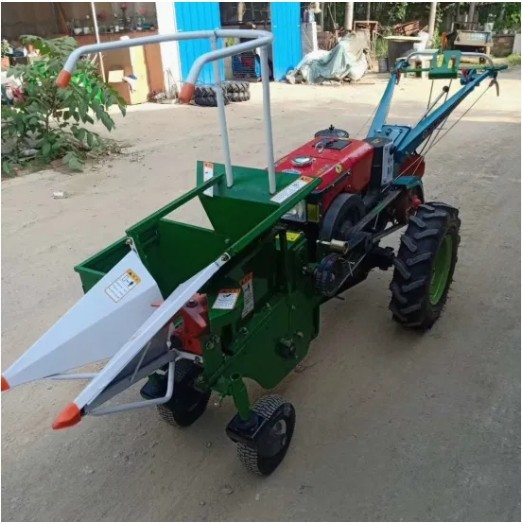

Now, let's talk about harvesters. Harvesters are machines that are used to collect crops at the end of the growing season. They come in all shapes and sizes, from small, single - row harvesters to large, multi - row monsters that can cover acres of land in no time. As a supplier, I offer a range of harvesters, like the Farm Tractor Type Front Corn Harvester, the Front Type Corn Harvester, Single Row, and the Single Row Corn Harvester. These machines are designed to make the harvesting process faster, more efficient, and less labor - intensive.
So, can these harvesters be used in organic farming? The short answer is yes, but there are some things to consider.
One of the main concerns in organic farming is contamination. Since organic farmers avoid synthetic chemicals, they need to make sure that their harvesting equipment doesn't introduce any unwanted substances into the crop. For example, if a harvester has been used with non - organic chemicals in the past, it could leave residues on the machine that might contaminate the organic crop. To prevent this, it's crucial to thoroughly clean and maintain the harvester before using it in an organic field. This means removing any dirt, debris, and chemical residues from the machine. Some farmers even use special cleaning agents that are approved for organic use.
Another aspect to think about is the impact of the harvester on the soil and the environment. Organic farming emphasizes the importance of soil health and biodiversity. When using a harvester, you need to make sure that it doesn't cause excessive soil compaction. Soil compaction can reduce the soil's ability to absorb water and nutrients, which can have a negative impact on future crops. To minimize soil compaction, some harvesters are designed with wide tires or tracks that distribute the weight of the machine more evenly over the soil.
In addition, organic farmers often focus on preserving the natural habitat and biodiversity of their farms. When operating a harvester, it's important to be aware of the potential impact on wildlife and plants in the area. For example, some harvesters can be adjusted to leave strips of unharvested crop for wildlife to feed on. This helps to maintain the ecological balance on the farm.
Now, let's look at the benefits of using a harvester in organic farming. One of the biggest advantages is efficiency. Harvesting by hand can be extremely time - consuming and labor - intensive, especially for large farms. A harvester can significantly reduce the time and effort required to harvest the crop. This means that farmers can get their crops to market faster, which can lead to increased profits.
Another benefit is consistency. A harvester can be set to harvest the crop at a specific height and with a certain level of precision. This ensures that the crop is harvested uniformly, which can improve the quality of the final product. In organic farming, where quality is often a key selling point, this can be a major advantage.
Harvesters also offer better control over the harvesting process. For example, some modern harvesters are equipped with sensors and technology that can detect the moisture content of the crop. This allows farmers to harvest the crop at the optimal time, which can improve the storage life and quality of the product.
So, if you're an organic farmer thinking about using a harvester, here are some tips. First, do your research and choose a harvester that is suitable for your specific needs. Consider the size of your farm, the type of crop you're growing, and your budget. Second, make sure to properly clean and maintain the harvester to prevent contamination. Third, be mindful of the environmental impact of the harvester and take steps to minimize any negative effects.
If you're interested in learning more about our range of harvesters and how they can be used in organic farming, I'd love to have a chat with you. Whether you're a small - scale organic farmer or a large - scale operation, we have a solution that can fit your needs. Reach out to start a conversation about how we can help you with your harvesting requirements.
In conclusion, harvesters can definitely be used in organic farming, but it's important to take the necessary precautions to ensure that they meet the standards and requirements of organic production. With the right equipment and proper maintenance, a harvester can be a valuable tool for organic farmers, helping them to increase efficiency, improve quality, and ultimately, make their farms more successful.
References
- Various industry reports on organic farming practices and equipment use
- Research papers on the impact of agricultural machinery on soil health and biodiversity