

Hey there, fellow farmers! As a supplier of high - quality ploughs, I've had countless conversations with farmers about the ins and outs of ploughing. One question that pops up time and time again is, "How often should you plough a field?" Well, grab a cup of coffee, sit back, and let's dive into this important topic.
First off, let's understand why we plough in the first place. Ploughing is like giving your soil a good shake - up. It helps to break up compacted soil, which allows air, water, and nutrients to penetrate deeper. This is crucial for the roots of your crops to grow strong and healthy. It also helps to bury weeds and crop residues, which can reduce competition for resources and prevent the spread of diseases.
The frequency of ploughing depends on several factors. Let's start with the type of soil you have. If you've got heavy clay soil, it tends to get compacted easily. In this case, you might need to plough more often, maybe once or twice a year. Clay soil has small particles that stick together tightly, and ploughing helps to break those clumps apart and improve its structure. On the other hand, if you're dealing with sandy soil, it's more porous and less likely to get compacted. You may only need to plough every two to three years. Sandy soil drains well, but it doesn't hold onto nutrients as effectively as other soils, so over - ploughing can actually be harmful as it can lead to excessive nutrient loss.
Another important factor is the type of crops you're growing. Some crops, like potatoes or root vegetables, require a loose and well - aerated soil to develop properly. For these crops, you'll probably want to plough before planting to create the ideal growing environment. For example, if you're planting potatoes, you need to plough deep enough to give the tubers plenty of room to expand. On the contrary, if you're growing grasses or legumes, they can often tolerate a more compacted soil. You might be able to get away with less frequent ploughing, perhaps once every few years.
The farming system you follow also plays a big role. In conventional farming, where large - scale monoculture is common, ploughing is often done more frequently. This is because the continuous planting of the same crop can lead to soil compaction and the build - up of pests and diseases. Regular ploughing helps to disrupt the life cycles of pests and break up the soil. However, in organic farming or no - till farming systems, the approach is different. Organic farmers try to work with nature as much as possible. They may use cover crops and green manures to improve soil fertility and structure instead of relying on frequent ploughing. No - till farming, as the name suggests, avoids ploughing altogether. Instead, seeds are planted directly into untilled soil. This helps to preserve soil structure, reduce erosion, and save time and fuel.
Now, let's talk about the potential downsides of over - ploughing. Over - ploughing can lead to soil erosion. When you break up the soil too often, the topsoil, which is rich in organic matter and nutrients, becomes more vulnerable to being washed away by rain or blown away by wind. It can also disrupt the soil's natural ecosystem. There are millions of beneficial organisms living in the soil, such as earthworms, bacteria, and fungi. These organisms play a vital role in decomposing organic matter, cycling nutrients, and improving soil structure. Excessive ploughing can harm these organisms and throw off the delicate balance of the soil ecosystem.

On the flip side, under - ploughing can also be a problem. If you don't plough enough, the soil can become too compacted. This restricts root growth, reduces water infiltration, and can lead to poor crop yields. Weeds may also become more difficult to control, as they can easily take root in the undisturbed soil.
So, how do you find the right balance? It's all about observation and experimentation. Keep an eye on your soil's condition. Look for signs of compaction, such as water pooling on the surface after a rain or roots having a hard time penetrating the soil. You can also conduct simple soil tests to check its structure and nutrient content. Try different ploughing frequencies in different parts of your field and see how your crops respond.
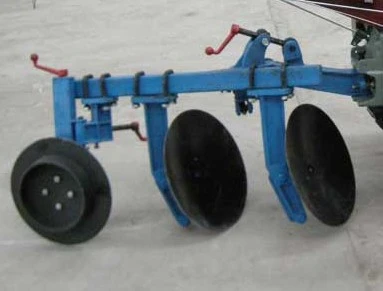
As a plough supplier, I'm here to offer you the best tools for the job. We have a wide range of ploughs to suit different needs. Check out our Hot Sale Disc Plough. It's designed to cut through tough soil and break up large clumps effectively. If you're on a budget, our Cheaper Double Plough is a great option. It offers good value for money without compromising on quality. And for those who demand the best, our Good Quality Double Plough is built to last and can handle even the most challenging ploughing tasks.
In conclusion, there's no one - size - fits - all answer to how often you should plough a field. It depends on your soil type, the crops you grow, and your farming system. By understanding these factors and making informed decisions, you can find the right ploughing frequency for your farm. This will not only improve your soil health and crop yields but also save you time and money in the long run.
If you're interested in learning more about our ploughs or have any questions about ploughing, feel free to reach out. We're always happy to help you make the best choices for your farm. Let's work together to achieve better farming results!
References:
- Brady, N. C., & Weil, R. R. (2002). The nature and properties of soils. Prentice Hall.
- Lal, R. (2009). Soil management. CRC Press.
