

The stability of a plough is a crucial factor in ensuring efficient and effective farming operations. As a leading plough supplier, we understand the significance of every component in a plough's design, and the landside plays an indispensable role in contributing to its stability. In this blog, we will delve into the science behind how the landside contributes to the stability of a plough, and why it matters for farmers.
Understanding the Plough and Its Components
Before we explore the role of the landside, let's briefly understand the basic structure of a plough. A plough typically consists of a share, a mouldboard, a landside, and a frog. The share is the cutting edge that slices through the soil, the mouldboard turns the soil over, the landside provides lateral support, and the frog holds the share and the mouldboard together. Each component has a specific function, and they work in harmony to achieve the desired tillage effect.
The Function of the Landside
The landside is a flat, vertical plate that is attached to the side of the plough body. Its primary function is to counteract the lateral forces generated during ploughing. When a plough moves through the soil, the share and the mouldboard exert a force on the soil, which in turn creates a reaction force on the plough. This reaction force has both a vertical and a lateral component. The vertical component is supported by the weight of the plough and the traction force provided by the tractor, while the lateral component is resisted by the landside.
Counteracting Lateral Forces
The lateral forces acting on a plough can cause it to deviate from its intended path, leading to uneven tillage and reduced efficiency. The landside acts as a stabilizer by providing a large surface area in contact with the soil. As the plough moves forward, the landside presses against the soil, creating a frictional force that opposes the lateral movement of the plough. This frictional force helps to keep the plough in a straight line, ensuring that the tillage is uniform and consistent.
Maintaining Depth and Width of Tillage
In addition to counteracting lateral forces, the landside also helps to maintain the depth and width of tillage. The landside is designed to be in contact with the bottom and the side of the furrow, which helps to control the depth of the plough. By adjusting the position of the landside, farmers can ensure that the plough penetrates the soil to the desired depth. Moreover, the landside also helps to maintain the width of the furrow by preventing the plough from spreading or narrowing as it moves through the soil.
Design Features of the Landside for Stability
The design of the landside is critical in determining its effectiveness in contributing to the stability of a plough. Several design features are incorporated to enhance the landside's performance.
Shape and Size
The shape and size of the landside are carefully designed to optimize its contact with the soil. A larger landside provides more surface area for frictional resistance, which is beneficial for stability. However, it also increases the draft force required to pull the plough. Therefore, a balance needs to be struck between the size of the landside and the draft force. In addition, the shape of the landside is often curved or angled to match the contour of the furrow, which helps to improve its contact with the soil and enhance stability.
Material and Surface Finish
The material used for the landside also affects its performance. High-quality materials with good wear resistance and strength are preferred to ensure that the landside can withstand the abrasive forces of the soil. Common materials used for landsides include steel and cast iron. The surface finish of the landside is also important. A smooth surface reduces friction, which can help to reduce the draft force. However, a slightly rough surface can provide better grip on the soil, which is beneficial for stability.
Importance of Landside Stability in Different Types of Ploughs
The role of the landside in contributing to stability is equally important in different types of ploughs, including single ploughs, double ploughs, and disc ploughs.
Single Ploughs
Single ploughs are commonly used in small-scale farming operations. The stability of a single plough is crucial for ensuring accurate tillage. The landside in a single plough helps to keep the plough in a straight line and maintain the depth and width of the furrow. A stable single plough allows farmers to work more efficiently and achieve better results. If you are looking for a Cheap Single Plough, our range of products offers excellent value for money without compromising on quality.
Double Ploughs
Double ploughs are designed to till a wider area in a single pass. The landside in a double plough plays a more significant role in maintaining stability, as the lateral forces acting on the plough are greater due to the wider width. A well-designed landside helps to counteract these forces and ensures that both plough bodies work in synchrony. Our Good Quality Double Plough is engineered with a robust landside to provide maximum stability and efficiency.
Disc Ploughs
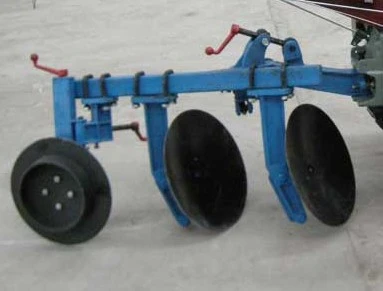
Disc ploughs use rotating discs to cut through the soil. Although the working principle of disc ploughs is different from that of mouldboard ploughs, the landside still contributes to their stability. The landside in a disc plough helps to keep the plough on track and prevents it from drifting. It also provides support to the disc assemblies, ensuring that they operate at the correct angle and depth. Our Hot Sale Disc Plough is equipped with a high-performance landside to deliver reliable and consistent performance.
Maintenance and Inspection of the Landside
To ensure the continued stability of a plough, proper maintenance and inspection of the landside are essential. Regularly check the landside for signs of wear and damage. If the landside is worn or damaged, it may not be able to provide adequate support, which can affect the stability of the plough. Replace the landside if necessary to maintain optimal performance.

Conclusion
In conclusion, the landside is a vital component of a plough that significantly contributes to its stability. By counteracting lateral forces, maintaining the depth and width of tillage, and providing support to the plough body, the landside ensures that the plough operates efficiently and effectively. As a plough supplier, we are committed to providing high-quality ploughs with well-designed landsides to meet the needs of farmers. If you are interested in our plough products or have any questions, please feel free to contact us for a purchase negotiation. We look forward to working with you to enhance your farming operations.
References
- ASABE Standards. (Year). Agricultural machinery management data. American Society of Agricultural and Biological Engineers.
- Kutz, M. (Ed.). (Year). Mechanical engineer's handbook. Wiley.


