

Can a plough be used in organic farming? This is a question that has sparked extensive debates among farmers, agricultural experts, and environmentalists. As a plough supplier, I've been closely following these discussions and have seen firsthand the changing attitudes towards the use of ploughs in organic farming. In this blog post, I'll explore this topic in depth, weighing the pros and cons of using ploughs in organic farming and providing insights based on scientific research and practical experience.
Understanding Organic Farming
Before delving into the use of ploughs in organic farming, it's essential to understand what organic farming entails. Organic farming is an agricultural system that relies on natural processes, biodiversity, and ecological balance to produce food, fiber, and other agricultural products. It avoids the use of synthetic pesticides, fertilizers, genetically modified organisms (GMOs), and growth hormones. Instead, organic farmers focus on building healthy soil, promoting natural pest control, and using sustainable farming practices.
The Role of Ploughs in Traditional Farming
Ploughs have been used in agriculture for thousands of years. They are essential tools for tilling the soil, preparing it for planting, and controlling weeds. By turning over the soil, ploughs break up compacted soil layers, improve soil aeration and drainage, and incorporate organic matter into the soil. This helps to create a favorable environment for plant growth and can increase crop yields.
Arguments for Using Ploughs in Organic Farming
Soil Aeration and Drainage
One of the primary benefits of using a plough in organic farming is improved soil aeration and drainage. Organic matter in the soil can become compacted over time, especially in areas with heavy rainfall or high traffic. By ploughing the soil, farmers can break up these compacted layers, allowing air and water to penetrate the soil more easily. This helps to promote root growth and nutrient uptake, leading to healthier plants.
Weed Control
Weed control is a significant challenge in organic farming. Without the use of synthetic herbicides, organic farmers rely on mechanical and cultural methods to manage weeds. Ploughing can be an effective way to control weeds by burying weed seeds and disrupting their growth cycles. By turning over the soil, ploughs expose weed roots to the surface, where they can dry out and die.
Incorporation of Organic Matter
Organic farmers often use organic matter, such as manure, compost, and cover crops, to improve soil fertility. Ploughing can help to incorporate this organic matter into the soil, where it can decompose and release nutrients over time. This helps to build soil structure, increase soil organic matter content, and improve soil fertility.
Arguments Against Using Ploughs in Organic Farming
Soil Erosion
One of the main concerns about using ploughs in organic farming is soil erosion. Ploughing can expose the soil surface to wind and water erosion, especially on sloping terrain. When the soil is turned over, the protective layer of vegetation and organic matter is removed, leaving the soil vulnerable to erosion. This can lead to the loss of topsoil, nutrients, and organic matter, which can have a negative impact on soil fertility and crop yields.
Disruption of Soil Structure
Ploughing can also disrupt the soil structure, especially if it is done too frequently or at the wrong time. When the soil is turned over, the natural aggregates that hold the soil particles together can be broken apart, leading to soil compaction and reduced soil porosity. This can make it more difficult for water and air to penetrate the soil, which can have a negative impact on plant growth.
Loss of Soil Organic Matter
Ploughing can also lead to the loss of soil organic matter. When the soil is turned over, the organic matter is exposed to the air, where it can decompose more quickly. This can lead to a decrease in soil organic matter content, which can have a negative impact on soil fertility and structure.
Alternatives to Ploughing in Organic Farming
No-Till Farming
No-till farming is a method of farming that involves planting crops directly into untilled soil. This method helps to preserve the soil structure, reduce soil erosion, and increase soil organic matter content. No-till farming can be achieved using a variety of techniques, such as direct seeding, strip tillage, and cover cropping.
Reduced Tillage
Reduced tillage is a method of farming that involves minimizing the amount of soil disturbance. This can be achieved by using shallow tillage equipment, such as cultivators and harrows, instead of ploughs. Reduced tillage helps to preserve the soil structure, reduce soil erosion, and increase soil organic matter content.
Mulching
Mulching is a method of covering the soil surface with a layer of organic material, such as straw, leaves, or grass clippings. Mulching helps to conserve soil moisture, suppress weed growth, and improve soil fertility. Mulching can be used in combination with no-till or reduced tillage farming methods.
Our Plough Products for Organic Farming
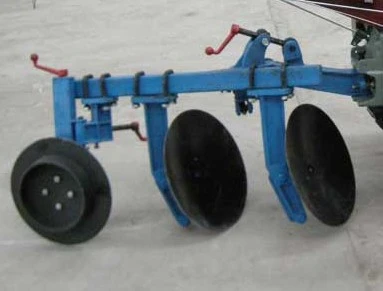
As a plough supplier, we understand the importance of providing high-quality ploughs that are suitable for organic farming. We offer a range of ploughs, including Cheap Single Plough, Good Quality Double Plough, and Hot Sale Disc Plough. These ploughs are designed to be efficient, durable, and environmentally friendly, making them ideal for use in organic farming.
Our single ploughs are lightweight and easy to operate, making them suitable for small-scale organic farms. They are available in a variety of sizes and configurations to meet the needs of different farmers. Our double ploughs are more powerful and can cover a larger area in less time, making them suitable for larger organic farms. They are designed to provide a deeper and more thorough tillage, which can help to improve soil aeration and drainage. Our disc ploughs are ideal for breaking up hard and compacted soil, making them suitable for use in areas with heavy clay soils. They are available in a variety of sizes and configurations to meet the needs of different farmers.
Conclusion
In conclusion, the question of whether a plough can be used in organic farming is not a straightforward one. While ploughs can provide several benefits, such as improved soil aeration and drainage, weed control, and incorporation of organic matter, they also have some drawbacks, such as soil erosion, disruption of soil structure, and loss of soil organic matter. Organic farmers need to carefully consider the pros and cons of using ploughs in their farming operations and choose the method that is most suitable for their specific needs and circumstances.
As a plough supplier, we are committed to providing our customers with high-quality ploughs that are suitable for organic farming. We believe that ploughs can play an important role in organic farming, but only if they are used correctly and in combination with other sustainable farming practices. If you are interested in learning more about our plough products or have any questions about using ploughs in organic farming, please don't hesitate to contact us. We look forward to working with you to help you achieve your organic farming goals.

References
- Lal, R. (2004). Soil erosion and carbon dynamics. Environmental Science & Policy, 7(6), 561-576.
- Pimentel, D., & Burgess, M. (2013). Soil erosion: A food and environmental threat. Environment, Development and Sustainability, 15(3), 309-322.
- Pretty, J. (2008). Sustaining agriculture and ecosystem services. Philosophical Transactions of the Royal Society B: Biological Sciences, 363(1491), 477-494.
- Stockdale, E. A., Lampkin, N. H., & Hovi, M. (2001). Organic agriculture and the supply of ecosystem services. Agriculture, Ecosystems & Environment, 85(1-3), 27-41.
