

As a seasoned supplier in the agricultural machinery industry, I often encounter inquiries from farmers and agricultural businesses about the versatility of harvesters. One of the most common questions is whether a harvester can be used for both dry and green crops. In this blog post, I will delve into this topic, exploring the technical aspects, advantages, and limitations of using a single harvester for different types of crops.
Technical Considerations
The first thing to understand is that dry and green crops have different physical properties. Dry crops, such as wheat, barley, and dry beans, are typically brittle and have a low moisture content. Green crops, on the other hand, like fresh vegetables, forage, and green corn, are more flexible and contain a higher amount of moisture. These differences pose unique challenges for harvesters.
Modern harvesters are designed with adjustable features to accommodate different crop types. For example, the cutting mechanism can be adjusted to handle various stem thicknesses and densities. Some harvesters are equipped with interchangeable cutting heads, allowing farmers to switch between different types of blades depending on the crop. Additionally, the threshing and separating systems can be fine - tuned to ensure efficient processing of both dry and green crops.
The cleaning system is another crucial component. For dry crops, the main goal is to separate the grain from the chaff and other debris. In the case of green crops, the cleaning system needs to remove soil, leaves, and other unwanted materials while preserving the quality of the harvested product. Many advanced harvesters are equipped with sophisticated cleaning systems that can be adjusted to meet these different requirements.

Advantages of Using a Single Harvester
One of the primary advantages of using a harvester for both dry and green crops is cost - efficiency. Purchasing a single machine that can handle multiple crop types eliminates the need to invest in separate harvesters for different crops. This not only saves money on the initial purchase but also reduces maintenance and storage costs.
Another benefit is convenience. Farmers can streamline their harvesting operations by using a single machine throughout the growing season. They don't have to switch between different harvesters, which can be time - consuming and labor - intensive. This allows for more efficient use of resources and a smoother harvesting process.
Moreover, a multi - purpose harvester can increase the overall productivity of a farm. With the ability to harvest different crops, farmers can make the most of their land and extend their harvesting season. For example, they can use the harvester to collect dry grains in the summer and then switch to green forage in the fall.
Limitations and Challenges
Despite the advantages, there are also some limitations to using a single harvester for both dry and green crops. One of the main challenges is the potential for cross - contamination. For example, if a harvester is used to collect dry grains and then immediately switched to green vegetables, there is a risk of transferring dust, debris, or pesticides from the dry crop to the green one. This can affect the quality and safety of the harvested produce.
Another limitation is that the performance of the harvester may not be optimal for all crop types. While modern harvesters are designed to be versatile, they may not be able to achieve the same level of efficiency and quality as a dedicated harvester for a specific crop. For instance, a harvester optimized for dry grains may not be as effective at harvesting delicate green vegetables without causing damage.
Our Harvester Solutions
At our company, we understand the needs of farmers and strive to provide high - quality harvesters that offer maximum versatility. Our range of harvesters is designed with advanced technology to ensure efficient and effective harvesting of both dry and green crops.
We offer the Cheap potato harvester for walking tractor, which is a cost - effective solution for small - scale farmers. This harvester is designed to handle potatoes as well as other root vegetables, making it suitable for both dry and semi - green crops. It is easy to operate and maintain, making it a popular choice among farmers.
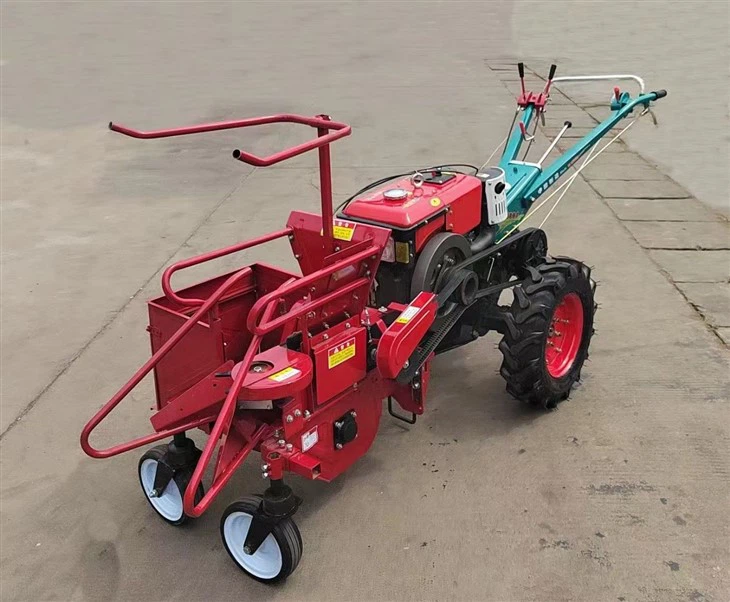
The Front Walking Tractor Corn Harvester is another great option. This harvester is specifically designed for corn, but it can also be adjusted to handle other types of grains and green crops. It features a powerful engine and a robust cutting mechanism, ensuring efficient harvesting even in challenging conditions.
For larger farms, we recommend the Farm Tractor Type Front Corn Harvester. This heavy - duty harvester is capable of handling large volumes of both dry and green crops. It is equipped with advanced technology for threshing, separating, and cleaning, ensuring high - quality harvests.
Contact Us for Purchase and Consultation
If you are interested in learning more about our harvesters or would like to discuss your specific harvesting needs, we encourage you to contact us. Our team of experts is always ready to provide you with detailed information and help you choose the right harvester for your farm. Whether you are a small - scale farmer or a large agricultural business, we have the solutions to meet your requirements.
References
- Smith, J. (2020). Agricultural Machinery: Principles and Practices. Publisher XYZ.
- Johnson, A. (2019). Advances in Harvester Technology. Journal of Agricultural Engineering, 45(2), 123 - 135.
- Brown, R. (2018). The Economics of Multi - Purpose Agricultural Machinery. Agricultural Economics Review, 32(3), 210 - 225.


